Free tools · Circular Blueprint

Practical tools for packaging decisions that connect.

Screen the consequences of a packaging change or model the physical system from product to case, pallet and transport. Both tools are free, browser based and explicit about what their outputs do—and do not—establish.

Free to useNo account or subscription required
Structured logicPurpose-built workflows, not generic chat answers
Assumptions visibleInputs, sources and limitations remain reviewable
Professional boundariesDecision support, not approval or certification

Choose the question

Two tools. Two different jobs.

PackChange ANZ helps you see what a proposed change could affect. LoadBlueprint helps you model how the physical packaging and logistics system fits together.

Australia & New ZealandChange impact

PackChange ANZ

Turn a proposed packaging change into a prioritised first-pass action plan across product safety, performance, operations, labelling, data, sustainability and approvals.

  • Adaptive assessment across primary, secondary and tertiary packaging
  • High, medium and low priorities with plain-language reasoning
  • Evidence register, suggested approval coverage and official source trail
  • Print-ready report for internal review
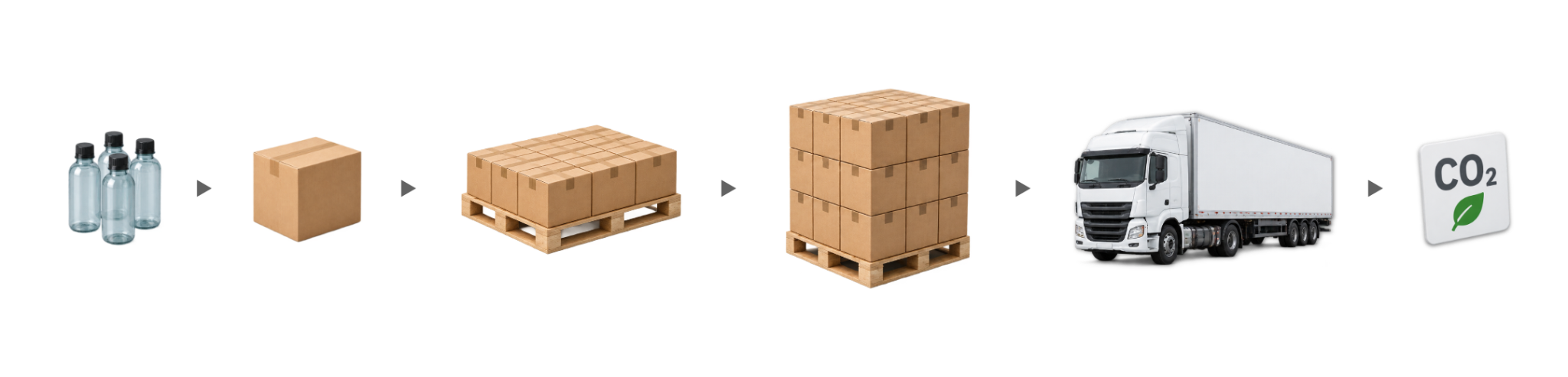
Product, case, pallet, transport and carbon planning workflow
Global geometryLoad planning

LoadBlueprint

Connect product, case, pallet, complete-stack, vehicle, cost and carbon assumptions in one study—and compare what changes downstream.

  • Case-to-pallet and product-to-case search
  • Layer, stack-support and advisory compression screening
  • Vehicle fit, dimension optimisation and case-library analysis
  • Reviewable report plus relevant PDF, CSV and JSON exports

Which should I use?

Start with the decision—not the software.

The tools complement each other, but they do not answer the same question.

Question
PackChange ANZ
LoadBlueprint
Start with
A proposed packaging change
A product, case, pallet or logistics system
Primary job
Reveal affected work, evidence and approvals
Model fit, capacity and connected constraints
Geographic scope
Australia and New Zealand
Geometry-led use worldwide; legal context must be verified locally
Main output
Prioritised action plan and evidence register
Selected load plan, comparison views and engineering-planning report
Use together
Flags when dimensions, palletisation or distribution need recalculation
Provides the detailed geometry and logistics screen for that work

Why these tools exist

The difficult part is often seeing the whole decision early enough.

Packaging work becomes expensive when connected consequences are discovered late: after artwork approval, tooling, trials, production orders, warehouse setup or freight commitments.

These tools are designed to make the first technical conversation better. They structure the question, expose dependencies and preserve the assumptions that still need confirmation.

01
Use measured information where possibleGeneric inputs are useful for exploration, but not a substitute for the finished commercial system.
02
Keep uncertainty visibleA clearly identified assumption is more useful than false precision.
03
Separate screening from approvalThe tools help identify work; your organisation and competent specialists retain decision authority.
04
Validate before releaseConfirm current requirements, supplier capability and real-world performance before commercial implementation.

Choose the question in front of you

Screen the change—or build the load plan.

Both tools are available now, free to use and designed to produce a useful starting record without pretending the final decision has already been made.