Polymer and film science
Materials, formulation, extrusion, barriers, mechanical behaviour and the limits of simplified material labels.
About Circular Blueprint
I’m Hosein Pouriman, PhD—a senior packaging specialist and polymer engineer based in New Zealand. Circular Blueprint is where I publish evidence-led packaging insight for people making difficult decisions across Australia and New Zealand.
The writing is personal and independent. It does not represent the position of any current or former employer, and it is not a substitute for legal, regulatory or product-specific advice.

Why this site exists
A resin code does not describe a recovery system. A supplier declaration does not settle a finished-pack claim. A lower material weight is not automatically a lower-impact result. Circular Blueprint exists to examine the connections that disappear when packaging is reduced to a slogan.

From polymer films to FMCG systems
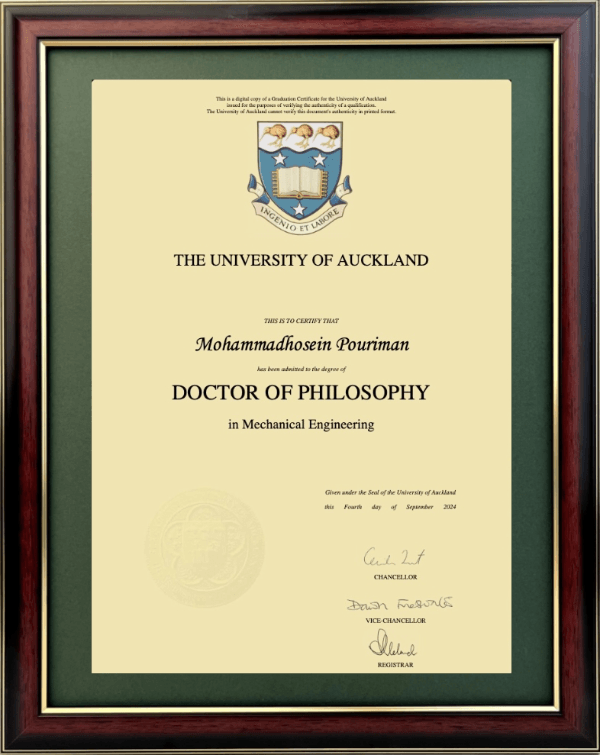
My doctoral research at the University of Auckland examined monolayer polymeric films for food-packaging applications. It involved materials, formulation, processing, structure and performance—the technical foundation beneath many packaging decisions.
Work in specialist materials development and large FMCG environments added the parts that laboratory work cannot answer alone: production trials, supplier capability, product protection, commercial constraints, sustainability reporting, labelling, implementation and the consequences of getting a change wrong at scale.
That combination shapes Circular Blueprint. I am interested in the point where material science meets the factory, the market, the recovery system and the evidence a business can actually defend.
View the doctoral research recordWhat informs the work
The perspective behind Circular Blueprint comes from applied work across packaging R&D, sustainability and FMCG operations in the Australia and New Zealand market.
Materials, formulation, extrusion, barriers, mechanical behaviour and the limits of simplified material labels.
New-product development, specifications, suppliers, technical assessment and packaging-change implementation.
Plant trials, line performance, conversion constraints, quality risks and what survives outside a presentation.
Material reduction, recycle-ready transitions, carbon considerations and the trade-offs behind circularity claims.
ANZ requirements, APCO reporting, Australasian Recycling Label implementation, claim support and decision records.
Cost and complexity reduction considered alongside product protection, supply resilience and operational risk.
How I approach packaging
Good packaging work rarely produces a perfect answer. It produces a clearer decision: grounded in the product, honest about uncertainty and explicit about the trade-offs the business is accepting.
Product protection, safety, shelf life, manufacturing and distribution are the starting conditions—not obstacles added later.
Requirements, guidance, supplier statements, test results and internal preferences should not be treated as the same kind of evidence.
A pack exists inside supply chains, factories, households and recovery systems. Optimising one part can damage another.
The reasoning, source date, uncertainty and ownership of the next step should remain understandable after the meeting is over.
Circular Blueprint today
The website is maintained primarily to publish useful packaging analysis and preserve a body of practical ANZ knowledge. It is not a public checkout or an always-open consultancy. Selected professional work may occasionally be considered where availability, scope and conflict checks allow, under a separate written agreement.
Corrections, source suggestions and clearly defined professional correspondence are welcome. Please do not send confidential information with an initial message.
Explore the publication
The archive follows the same questions that shape real packaging work: what applies, what performs, what the recovery system can handle and what the change costs.
Requirements, stewardship, labels, evidence and environmental claims across Australia and New Zealand.
02Material choices and circular-design practices examined in the context of real products and systems.
03Reducing material, complexity and cost without losing protection or operational performance.
04A practical view of the technical, regulatory and market shifts affecting FMCG packaging in ANZ.
Continue reading
Browse practical articles on packaging regulation, materials, performance, recovery and cost across Australia and New Zealand.