
Hosein Pouriman, PhD, Packaging & Sustainability Expert ANZ
How a Professional Packaging Audit Can Reveal Thousands in Hidden Savings
Having worked with multiple FMCG companies, I have noticed that for most businesses, packaging is seen as a cost centre. It is a line item on a spreadsheet, a necessary expense to transfer a product from point A to point B safely. You negotiate with your suppliers, you buy in bulk and you hope for the best.
But what if I told you that for the vast majority of businesses, the packaging component of the operation is actively leaking money?
Most often it is not happening in one noticeable or big obvious gush. It is happening in thousands of tiny invisible drips across entire operations. It is found in excess material or over-packaging, in wasted transport space and in inefficient processes. This cannot be seen on a standard invoice but it is affecting the bottom line of the business every single day.
A professional packaging audit is the tool that makes these invisible losses visible. It is not about just counting boxes; it is a deep, forensic analysis of the entire packaging ecosystem, designed to find precisely where the value is being lost and more importantly, how to get that value back.
Beyond the Price-Per-Unit: Where the Real Savings Are Hiding
Let us consider the following case studies and specific areas where cost savings typically emerge from a proper packaging audit done by professionals.
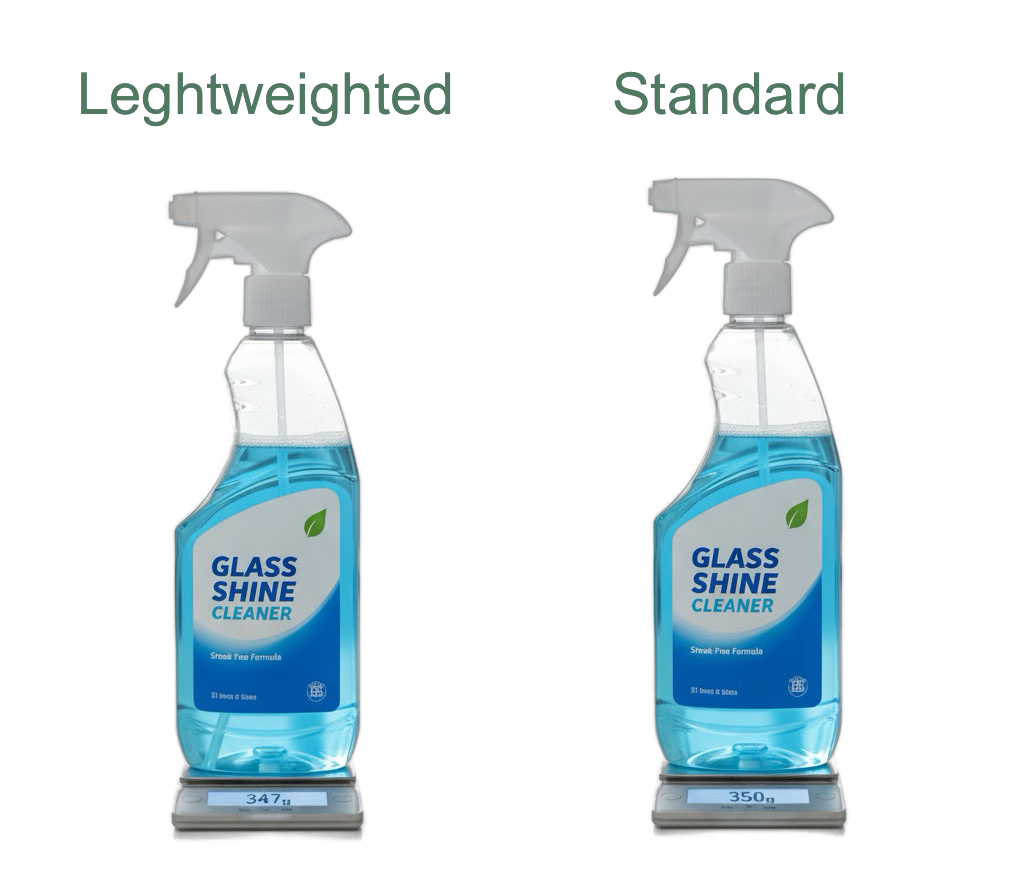
1. Material Optimisation and "Light-Weighting"
This is the most direct saving. The fundamental question is: Is a product using more material than it actually needs?
The Problem:
The box might be specified to a higher grade of cardboard than necessary for the product's weight. The plastic film might be 5 microns thicker than it needs to be to ensure seal integrity. These tiny excesses -often legacies from old designs- multiplied by tens of thousands of units produced, add up to a staggering amount of wasted money and material.
The Audit Solution:
The product must be analysed according to its specific needs and the realities of its supply chain journey. Through careful analysis, "light-weighting" is often recommended -reducing the amount of material used without compromising on strength or product protection. This could mean a lower-grade board, a thinner film or a slightly smaller format. All of these lead to an immediate reduction in the cost per unit.
2. Supply Chain and Logistics Efficiency
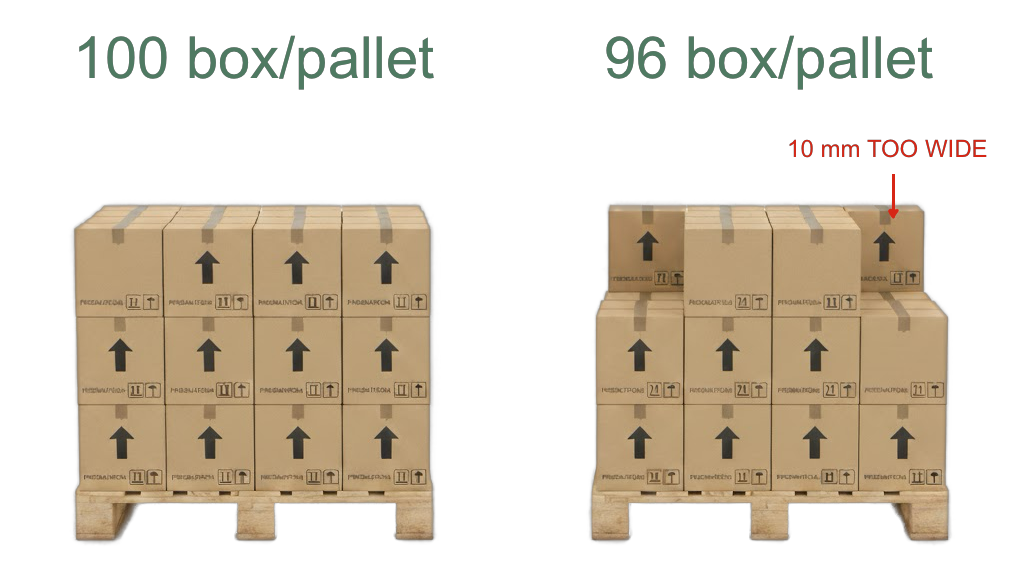
Your package design dictates your logistics costs. If the design is inefficient, you are paying to transport empty space.
The Problem:
Let us say a product's box is 10mm too wide. This might seem negligible but it could mean that only 96 boxes fit on a standard pallet instead of 100. That single centimetre is forcing the business to pay for more pallets, more warehouse space and more truck journeys over the course of a year.
The Audit Solution:
A packaging auditor looks at the system, not just the box. We analyse how the packaging interacts with the pallets, the warehouses and the shipping containers. By redesigning a package to maximise pallet density (a process called "palletisation"), we can slash freight and storage costs. In many instances, these logistics savings often dwarf the cost of the packaging itself.
3. SKU Rationalisation and Standardisation
Complexity is the enemy of efficiency. The more unique packaging formats being held by the production team, the higher the operational overhead.
The Problem:
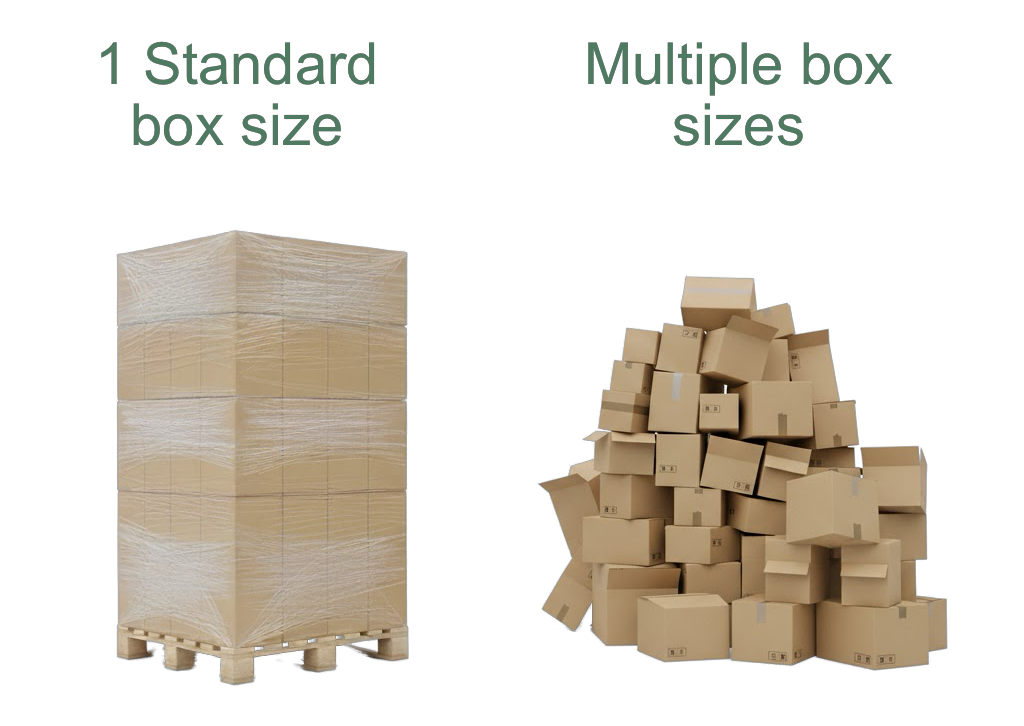
A business often grows organically over the years and ends up with 27 different box sizes for products that are all more or less the same dimensions. This forces the procurement team to order small quantities of each packaging size, missing out on volume discounts. The warehouse becomes a chaotic mess of different SKUs which complicates the work of the production teams, increases the room for error and reduces packing efficiency.
The Audit Solution:
A full analysis of the product range and the packaging inventory needs to be performed. The goal of SKU rationalisation is to drastically reduce the number of unique formats. Can five of those boxes be replaced by one cleverly designed, standard-sized box? This allows the business to consolidate purchasing, order in larger volumes to get better pricing and simplify the entire warehousing and packing process.
4. Compliance and Risk Mitigation (Avoiding Future Costs)
The cheapest problem is the one that is avoided in the first place.
The Problem:
If the business is unaware of the latest regulation and compliance rules, it might unknowingly use a material that is about to be phased out or banned by new national legislation. For example, in 18 months the business may be forced into a rushed, chaotic and expensive redesign, potentially risking fines or having products rejected by major retailers.
The Audit Solution:
A professional audit is also a health check for compliance. Materials and formats at risk from upcoming legislation (like single-use plastic bans) and APCO requirements must be identified. By proactively designing these risks out of the business right now, we can help avoid the huge future costs of non-compliance, emergency redesigns and reputational damage.
An Investment, Not an Expense
It is time to stop thinking of packaging as a sunk cost. It is a dynamic and strategic part of the business that can either drain resources or drive efficiency.
A professional packaging audit is not an expense. It is a strategic investment that provides a clear, data-driven roadmap to unlocking savings, de-risking the business and building a more resilient, profitable and sustainable operation. In almost every case, the audit pays for itself many times over within the first year.
Are you ready to find out where the money is hiding in your packaging? Circular Blueprint's data-driven packaging audits are designed to provide a comprehensive, top-to-bottom analysis of your entire system, delivering a clear action plan with measurable ROI. Contact us today for a confidential consultation.
Resources of this topic:
Is Your Strategy Ready for 2026?
Navigating the shifting regulatory landscape in Australia and New Zealand requires a plan, not guesswork. Download the free executive guide to:
- Master the new APCO targets.
- Optimise costs without sacrificing quality.
- Select the winning materials for the future.
Subscribe to our Email List
Get curated content delivered to your inbox.
No spams. Unsubscribe any time.


Expert packaging consultation focused on sustainability, compliance, and cost reduction for Australian and New Zealand businesses. Navigate complexity, achieve your goals.
Our Commitment
Helping Australian & NZ businesses achieve sustainable packaging goals, ensure regulatory compliance, and optimise costs for measurable results.
Circular Blueprint • NZBN 9429053436047
Privacy policy • Terms of service • All Rights Reserved