
Hosein Pouriman, PhD, Packaging & Sustainability Expert ANZ
Packaging Innovations Radar: 5 Emerging Technologies Shaping 2026
In the daily grind of compliance and cost management, it is easy to lose sight of the horizon. However, the packaging industry is currently undergoing a period of rapid technological evolution.
In my advisory work, I often caution clients against "Shiny Object Syndrome" -chasing every new material that promises to save the world. Most of these concepts fail to scale. However, there are specific technologies that have moved past the experimental phase and are now commercially viable, offering genuine strategic advantages.
As we look toward 2026, the focus is shifting from simple material substitution to intelligence and functionality. We are moving from packaging that just "holds" the product to packaging that protects it actively and communicates digitally.
Here are the five emerging technologies that I believe are critical for Australian and New Zealand businesses to watch.
1. The Digital Leap: GS1 2D Barcodes
If you pick up a product today, it likely has a standard linear barcode (EAN/UPC) and perhaps a separate QR code for marketing. By 2027, this will change.
We are in the midst of a global transition known as "Sunrise 2027," led by GS1. The goal is to move to a single, 2D barcode (like a QR code) that can be scanned at the checkout for price and scanned by a consumer's smartphone.
Why it matters: This is not just about payments. It allows you to embed massive amounts of data -expiry dates, batch numbers, recycling instructions and sustainability credentials- into a single code. It is the backbone of the "Digital Product Passport," allowing you to declutter your label design while providing deeper transparency.
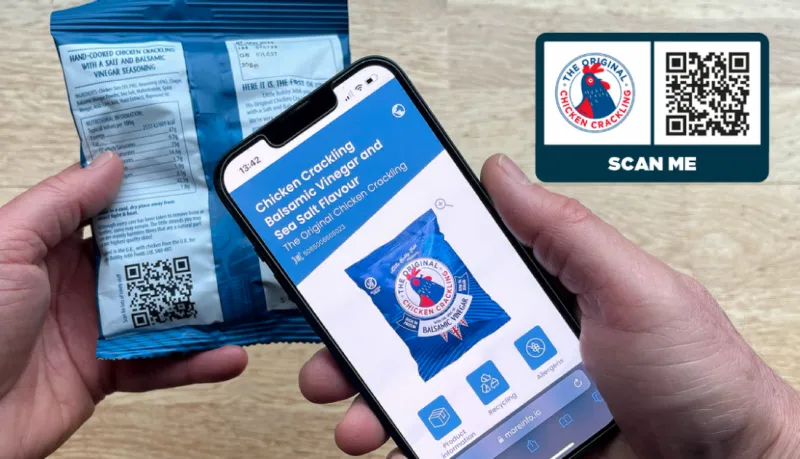
"GS1 NZ is aiming for all retail point-of-sale systems in New Zealand to scan 2D barcodes by the end of 2027." -GS1 New Zealand
2. Material Science: Next-Gen Aqueous Bio-Barriers
For years, the industry has struggled with coffee cups and takeaway containers. To make paper waterproof, we laminated it with Polyethylene (PE), creating a recycling nightmare.
The new wave of innovation is in Aqueous (Water-Based) Dispersion Coatings. These are barrier coatings that can be printed onto paper like ink, providing grease and water resistance without a plastic film layer.
Why it matters: As state bans on plastic-lined cups tighten across Australia, these bio-barriers are the solution. The best new iterations are certified home compostable and repulpable in standard paper mills, finally solving the "mixed material" problem for fibre packaging.
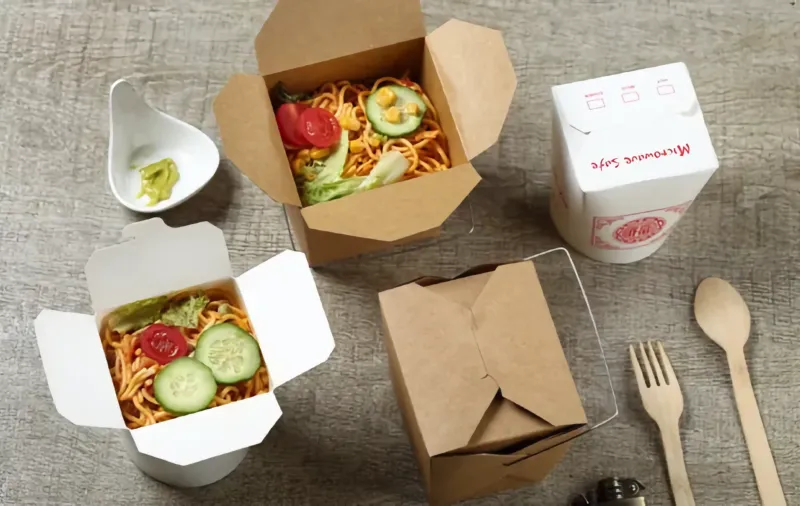
Take away food in aqueous bio-barrier packaging. (Image: millionpack)
3. Active Packaging: The War on Food Waste
Sustainability is often viewed through the lens of packaging waste. However, the carbon footprint of food waste is often ten times higher than that of the package itself.
Active Packaging technologies are now scaling up. These include:
Oxygen Scavengers: Invisible additives in the film that absorb oxygen to prevent spoilage.
Ethylene Absorbers: Pads or films that slow down the ripening of fresh produce.
Antimicrobial Coatings: Surfaces that inhibit bacterial growth.
Why it matters: For ANZ businesses exporting meat, seafood or fresh produce to Asia or Europe, extending shelf life by even two days can drastically reduce spoilage and open up new markets that were previously unreachable by sea freight.
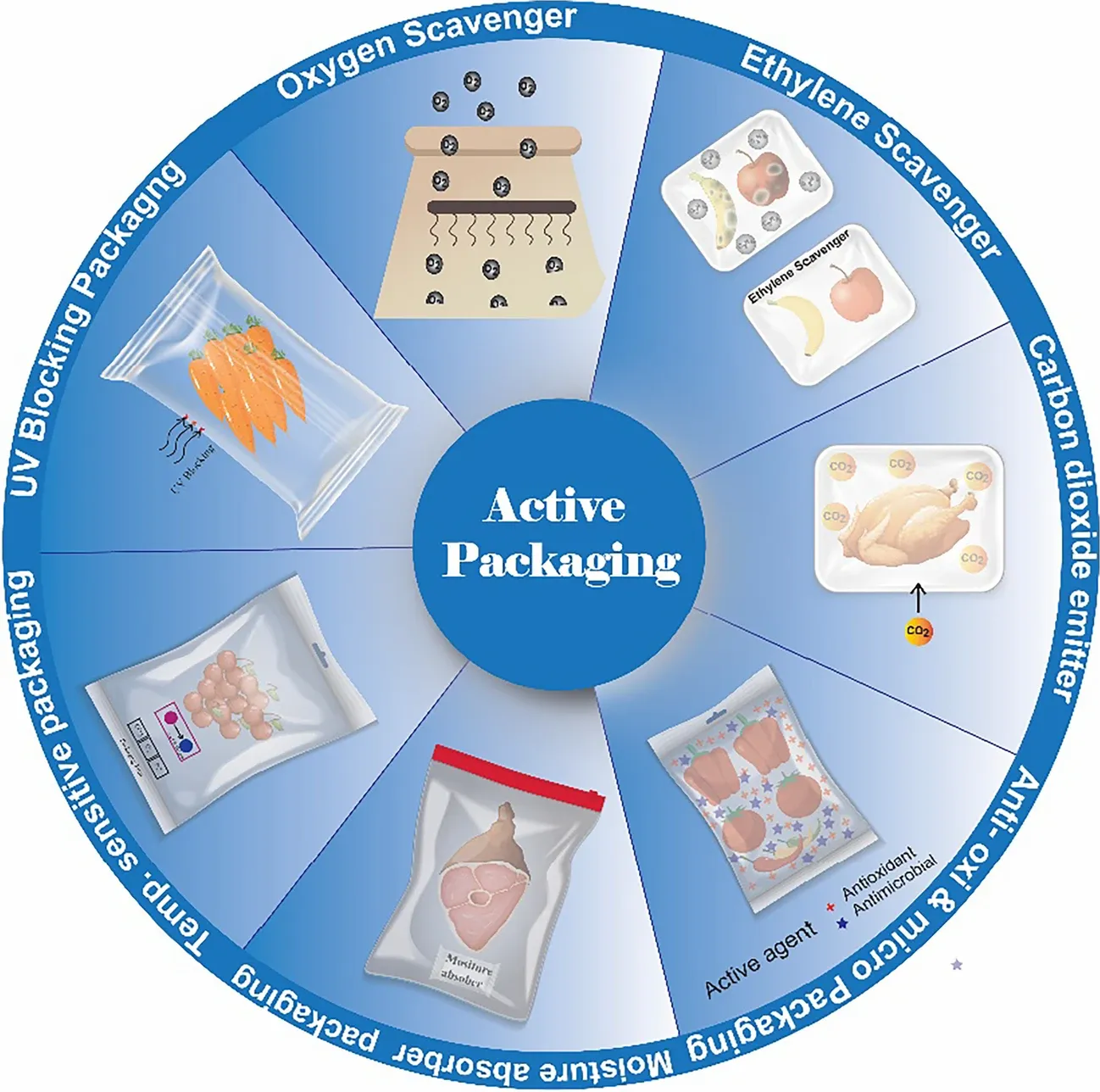
Different technologies for active packaging for food packaging applications.
(Image: Active Packaging Materials. Curr Food Sci Tech Rep 1, 123–132 (2023).)
4. Intelligent Sorting: Digital Watermarks (HolyGrail 2.0)
One of the biggest failures of recycling is sorting. Optical sorters struggle to tell the difference between a food-grade milk bottle and a non-food bleach bottle if they are made of the same plastic.
Digital watermarking (pioneered by the HolyGrail 2.0 initiative) involves embedding imperceptible codes -the size of a postage stamp- all over the packaging artwork. These codes are invisible to the human eye but can be read by high-speed cameras in recycling facilities.
Why it matters: This technology allows waste facilities to sort packaging with 99% accuracy. It can distinguish between food-grade and non-food-grade packaging, potentially unlocking vast new streams of high-quality Post-Consumer Recycled (PCR) material.
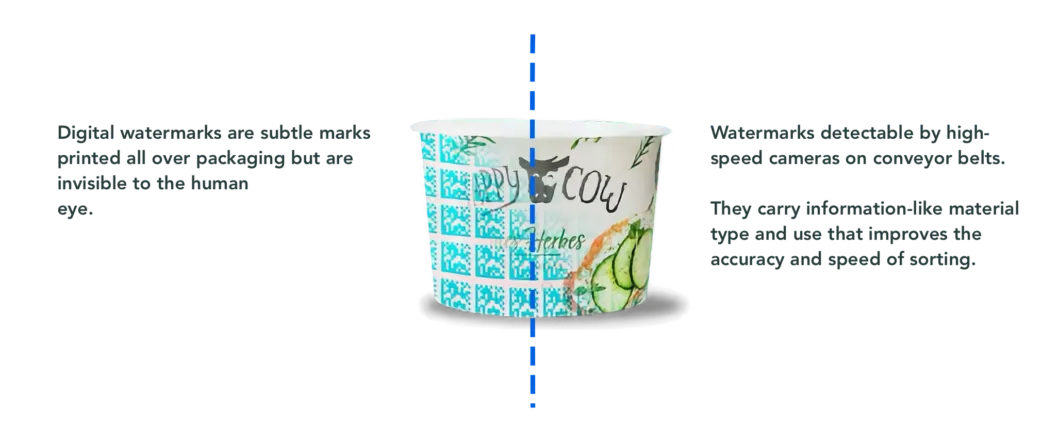
(Image: Holy Grail 2.0)
5. Nanotechnology: Super-Thin Mono-Materials
We have discussed the strategic importance of mono-materials. The historical drawback was that a single layer of PE often lacked the barrier strength of a multi-layer foil laminate.
Nanotechnology is solving this. By using microscopic platelets or nano-coatings, manufacturers are creating mono-material films that have the barrier performance of glass or metal.
Why it matters: This eliminates the trade-off. You can now package sensitive products -like coffee, pet food or baby food- in a fully recyclable, mono-material pouch without sacrificing shelf life.
Final Thought
Technology is a tool, not a strategy. Adopting these innovations is not about having the "coolest" packaging; it is about solving specific business problems.
Whether it is using 2D barcodes to solve a labelling space issue or using active packaging to reduce export waste, the winning brands in 2026 will be those that deploy these technologies to create value -both for their bottom line and for the planet.
Integrating new technologies into an existing supply chain requires careful validation and testing. Circular Blueprint acts as your innovation scout, helping you identify which emerging technologies are relevant to your product and managing the technical transition. Contact us today for a confidential consultation.
Is Your Strategy Ready for 2026?
Navigating the shifting regulatory landscape in Australia and New Zealand requires a plan, not guesswork. Download the free executive guide to:
- Master the new APCO targets.
- Optimise costs without sacrificing quality.
- Select the winning materials for the future.
Subscribe to our Email List
Get curated content delivered to your inbox.
No spams. Unsubscribe any time.


Expert packaging consultation focused on sustainability, compliance, and cost reduction for Australian and New Zealand businesses. Navigate complexity, achieve your goals.
Our Commitment
Helping Australian & NZ businesses achieve sustainable packaging goals, ensure regulatory compliance, and optimise costs for measurable results.
Circular Blueprint • NZBN 9429053436047
Privacy policy • Terms of service • All Rights Reserved