
Hosein Pouriman, PhD, Packaging & Sustainability Expert ANZ
Beyond the 2025 Targets: The New Era of Mandatory Packaging Compliance
We are now well into 2026 and the packaging industry has crossed a significant psychological and legislative line.
For the last five years, Australian and New Zealand businesses operated under the shadow of the "2025 National Packaging Targets." These targets were ambitious, but crucially, they were voluntary. They relied on the goodwill of the industry to design out waste and increase recycling.
Now that the deadline has passed, the verdict from Canberra and Wellington is clear: voluntary measures were insufficient.
In my advisory work this year, I have observed a distinct shift in the regulatory temperature. The phase of "education and encouragement" has ended. We have now entered the Era of Enforcement.
For business leaders, the strategy for 2026 must shift from "aspirational goal-setting" to "hard compliance." Here are the three critical realities defining the market right now.
1. Federal Mandates: The End of "Best Practice"
The Federal Government signalled its frustration with the slow pace of change throughout late 2025. Now, we are seeing the consequences.
The focus has shifted from the Australian Packaging Covenant Organisation (APCO) simply providing guidelines, to the government stepping in to regulate directly.
The New Reality:
Mandated Design Standards: The principles of the Sustainable Packaging Guidelines (SPGs)—once a helpful framework—are transitioning into minimum legal standards for market entry. Packaging that fails to meet basic recyclability criteria is increasingly at risk of being regulated off the shelf.
Recycled Content Quotas: Following the European model, the conversation is no longer about "trying" to use recycled content. We are moving toward mandated percentages (e.g., 30% recycled content in plastic packaging) with tax penalties for those who rely solely on virgin fossil-fuel plastics.
The Strategic Takeaway:
If your packaging portfolio is still reliant on non-recyclable composite materials, you are no longer just lagging behind "best practice"; you are facing a tangible legislative risk.
2. The ACCC: From Warnings to Litigation
In previous years, the Australian Competition & Consumer Commission (ACCC) issued guidance notes and warnings about greenwashing. In 2026, their strategy has evolved into active litigation.
The regulator views misleading environmental claims as a severe economic harm that distorts the market and dupes consumers.
The New Reality:
Example Cases: The ACCC is actively seeking high-profile cases in the FMCG and retail sectors to set legal precedents. Vague terms like "Ocean Bound," "Kinder to the Planet," or "Biodegradable" are squarely in the crosshairs.
The Burden of Proof: It is no longer enough to have good intentions. If you make a claim on-pack, you must possess independent, scientific evidence (such as a Life Cycle Assessment) to substantiate it before the product hits the shelves.
The Strategic Takeaway:
Marketing and Legal teams must be aligned. A claim that cannot be proven with a third-party report is a liability. Audit your artwork now.
3. New Zealand: The Cost of Stewardship
New Zealand is moving faster than Australia on the "Polluter Pays" principle. With plastic packaging now established as a "Priority Product," the financial reality of Regulated Product Stewardship is biting.
The New Reality:
The Financial Hit: Compliance is no longer just paperwork; it is a line item. Manufacturers are facing levies that are "eco-modulated"—meaning you pay significantly more for difficult-to-recycle packaging.
Data Scrutiny: The reporting requirements have intensified. Estimates are no longer acceptable; exact weights and material compositions are required to calculate liability.
The Strategic Takeaway:
Review your margins. If you are using high-levy materials (like coloured PET or PVC), the cost of compliance may now outweigh the cost of switching to a cleaner, lower-levy material.
Final Thought
The "2025 Targets" are gone, but they have been replaced by something far more potent: the rule of law.
The businesses that will navigate 2026 successfully are those that stop looking backward at what they missed and start looking forward at what is required. This is the year to professionalise your compliance, lock down your data and treat sustainability as a core operational licence to operate.
Operating in a mandatory regulatory environment requires precision and foresight. Circular Blueprint provides strategic compliance audits to help businesses identify their legislative gaps, substantiate their claims and navigate the new era of enforcement. Contact us today for a confidential consultation.
Resources of this topic:
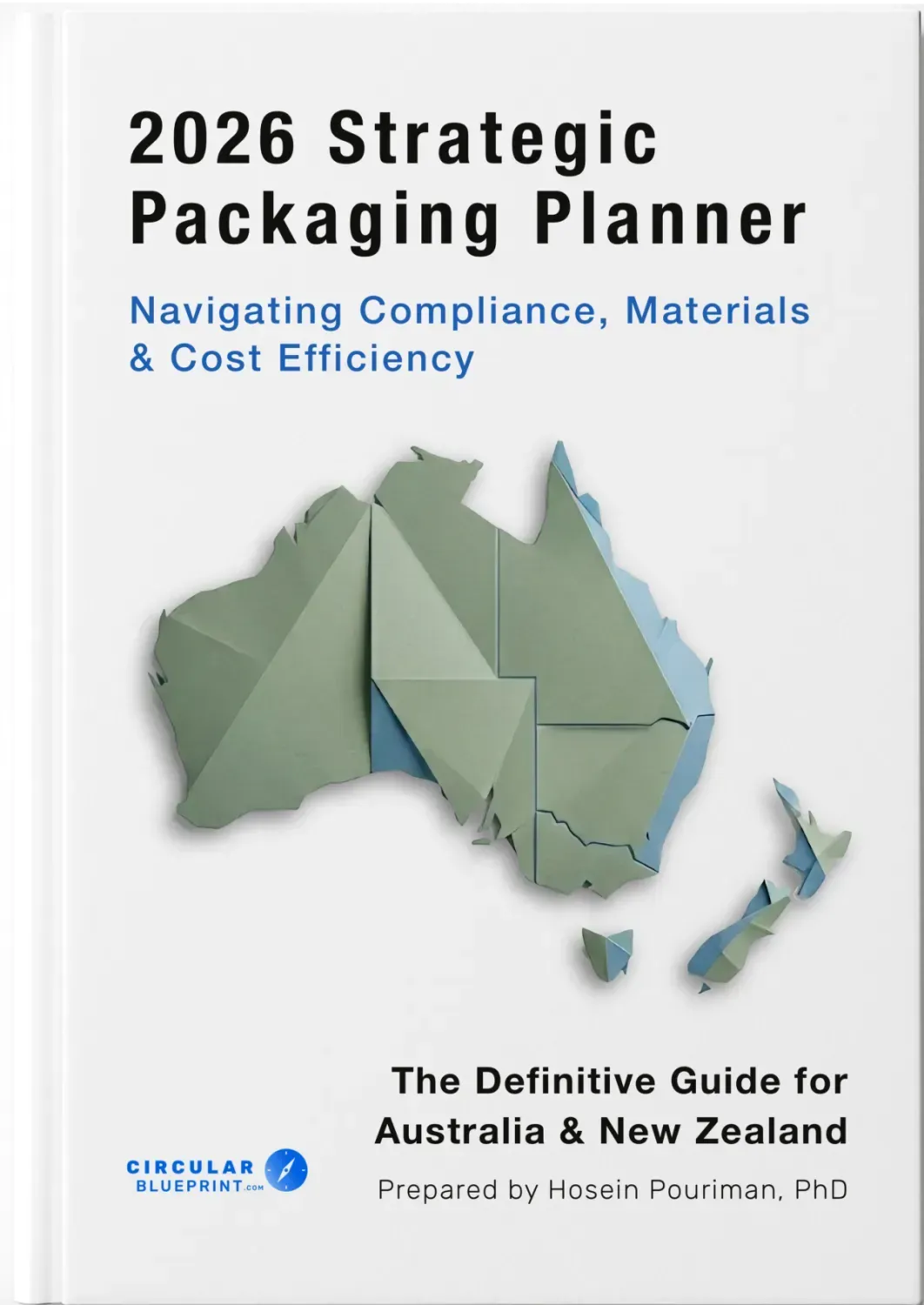
Is Your Strategy Ready for 2026?
Navigating the shifting regulatory landscape in Australia and New Zealand requires a plan, not guesswork. Download the free executive guide to:
- Master the new APCO targets.
- Optimise costs without sacrificing quality.
- Select the winning materials for the future.
Subscribe to our Email List
Get curated content delivered to your inbox.
No spams. Unsubscribe any time.


Expert packaging consultation focused on sustainability, compliance, and cost reduction for Australian and New Zealand businesses. Navigate complexity, achieve your goals.
Our Commitment
Helping Australian & NZ businesses achieve sustainable packaging goals, ensure regulatory compliance, and optimise costs for measurable results.
Circular Blueprint • NZBN 9429053436047
Privacy policy • Terms of service • All Rights Reserved