
Hosein Pouriman, PhD, Packaging & Sustainability Expert ANZ
Greenwashing Risks in Packaging: How to Make Substantiated Environmental Claims
There was a time when a green leaf icon and the word "eco-friendly" printed on a box were considered savvy marketing. Those days are unequivocally over.
In the current Australian and New Zealand market, sustainability claims are under intense scrutiny. This pressure is coming from two directions: a cynical public that is tired of empty promises and regulators -specifically the Australian Competition & Consumer Commission (ACCC)- who have made "greenwashing" a top enforcement priority.
In my work auditing packaging artwork for FMCG brands, I often see well-intentioned businesses walking a compliance tightrope. They want to tell their sustainability story, but they lack the technical evidence to back it up.
The risks here are substantial. Beyond the financial penalties (which can be significant), the reputational damage of being publicly named for misleading consumers can destroy brand trust overnight. This guide outlines the strategic principles for making environmental claims that are not just compelling, but compliant.
The Core Principle: Evidence Before Marketing
The golden rule of avoiding greenwashing is simple: Do not say it if you cannot prove it.
The ACCC’s guidance is clear. Any environmental claim made on packaging must be accurate, specific and substantiated by evidence. "Puffery" -exaggerated marketing language- is no longer an acceptable defence when it comes to environmental impact.
Here are the three most common traps businesses fall into and how to avoid them.
Trap #1: The Vague Claim (e.g., "Eco-Friendly", "Green", "Kind to the Planet")
Broad, sweeping terms are the most dangerous territory in packaging marketing.
The Risk: What does "Eco-Friendly" actually mean? Does it mean the package is recyclable? Does it mean it was made with renewable energy? Or does it simply mean it is green in colour? Because these terms have no standard definition, they are inherently misleading to consumers.
The Strategic Fix: Be specific. Replace broad adjectives with factual descriptions. Instead of "Eco-Friendly," say "Made from 100% Recycled Cardboard." Instead of "Green Choice," say "Recyclable in Kerbside Bins." Specificity builds trust and removes ambiguity.
Trap #2: The Hidden Trade-Off
This occurs when a claim highlights a positive attribute while ignoring a significant negative one.
The Risk: A classic example is a "biodegradable" plastic bag. A brand might claim it is "Plastic Free" or "Earth Friendly" because it breaks down. However, if that bag requires industrial composting conditions that do not exist in most councils and it acts as a contaminant if put in the recycling bin, the claim is misleading. The "benefit" is outweighed by the practical reality of its disposal.
The Strategic Fix: Consider the full lifecycle. Ensure your claim reflects the realistic end-of-life outcome for the majority of consumers. If a product is only recyclable in store drop-off systems (like soft plastics), you must make that clear rather than imply it is kerbside recyclable.
Trap #3: Visual Greenwashing
Greenwashing is not just about words; it is about design.
The Risk: Using imagery that implies a third-party endorsement or a natural benefit that does not exist. This includes using "fake" certification logos (e.g., a green tick that looks like a government seal but is actually just a graphic design element) or imagery of leaves and forests on a product containing harmful chemicals or non-recyclable materials.
The Strategic Fix: Only use recognised, third-party certification logos such as the Australasian Recycling Label (ARL), the Forest Stewardship Council (FSC) tree or the Australasian Bioplastics Association (ABA) seedling. These logos carry weight because they are backed by rigorous standards.
A Framework for Safe Claims
Before approving any artwork, I advise clients to run their packaging through this four-point checklist:
1. Is it specific? (Does it explain exactly what the benefit is?)
2. Is it substantiated? (Do you have a technical datasheet or test result on file to prove it?)
3. Is it clear? (Will the average shopper understand it without reading the fine print?)
4. Is it the whole truth? (Are you omitting a negative factor that changes the context?)
Remarks: Trust is Your Currency
Sustainability is no longer a differentiator; it is an expectation. Consumers want to support brands that are doing the right thing, but they demand honesty.
By moving away from vague marketing spin and embracing precise, evidence-based communication, you protect your business from regulatory wrath. More importantly, you build a relationship with your customer based on transparency. In the long run, being trusted is far more profitable than being "green."
Navigating the legal nuances of environmental claims requires a bridge between technical packaging knowledge and marketing strategy. Circular Blueprint acts as that bridge. We audit your packaging claims against the latest ACCC guidelines and technical standards to ensure your brand story is safe, substantiated and effective. Contact us today for a confidential consultation.
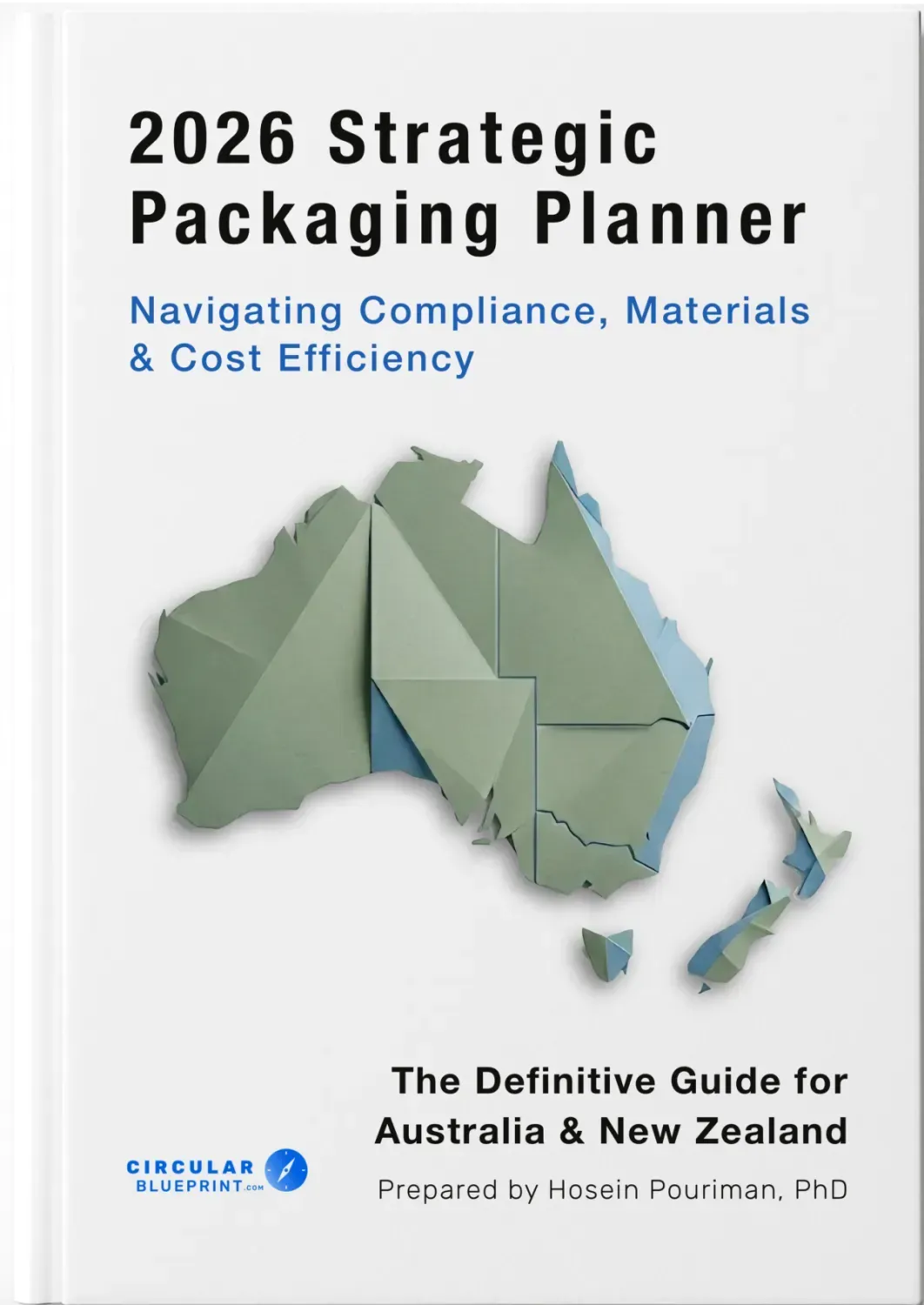
Is Your Strategy Ready for 2026?
Navigating the shifting regulatory landscape in Australia and New Zealand requires a plan, not guesswork. Download the free executive guide to:
- Master the new APCO targets.
- Optimise costs without sacrificing quality.
- Select the winning materials for the future.
Subscribe to our Email List
Get curated content delivered to your inbox.
No spams. Unsubscribe any time.


Expert packaging consultation focused on sustainability, compliance, and cost reduction for Australian and New Zealand businesses. Navigate complexity, achieve your goals.
Our Commitment
Helping Australian & NZ businesses achieve sustainable packaging goals, ensure regulatory compliance, and optimise costs for measurable results.
Circular Blueprint • NZBN 9429053436047
Privacy policy • Terms of service • All Rights Reserved