
Hosein Pouriman, PhD, Packaging & Sustainability Expert ANZ
How to Correctly Use the Australasian Recycling Label (ARL): A Step-by-Step Guide
In a marketplace crowded with vague symbols and hopeful claims, the Australasian Recycling Label (ARL) stands out. It is designed to be the single source of truth on packaging recyclability, providing consumers with clear, simple instructions on how to dispose of each packaging component.
But for businesses, the ARL is more than just a logo. It is an evidence-based system that requires a formal assessment process. In my work with Australian brands, I often see a dangerous misconception: the belief that a company can simply choose to use the label based on their own opinion.
This is a critical error. Simply downloading the symbol and adding it to your artwork without the correct data backing is one of the most risky compliance mistakes a brand can make.
So how do you do it right? This guide provides the clear, step-by-step process for correctly assessing your packaging and earning the right to use the ARL.
The Golden Rule: The ARL is an Output, Not an Ingredient
Before we proceed, it is crucial to understand this fundamental principle: You cannot decide to use the ARL. You must prove you are eligible to use it.
The ARL is the final output of a rigorous technical assessment. It is awarded to a specific piece of packaging based on its physical properties; it is not chosen by a graphic designer. The entire system is built on this principle of verification to maintain consumer trust and avoid the heavy penalties associated with greenwashing.
Meet PREP: The Engine Behind the ARL
The heart of the ARL program is the Packaging Recyclability Evaluation Portal (PREP).
PREP is a sophisticated online simulation tool. It mimics the journey of a packaging item through the Australian and New Zealand recycling ecosystems. It considers a vast range of technical factors:
Material Composition: What are the exact polymers, paper grades or metals used?
Dimensions: Is the item too small (under 50mm) to be captured by sorting machinery?
Inks and Adhesives: Do the inks contain carbon black that hides the pack from optical sorters? Does the glue dissolve at the right temperature?
Component Separability: Can the consumer realistically separate the lid from the bottle?
The PREP tool aggregates this data and determines the fate of each component, which then dictates the precise ARL artwork you receive.
Your 5-Step Guide to Applying the ARL Correctly
Step 1: Be an APCO Member in Good Standing
Access to the PREP tool and the license to use the ARL is a key benefit of being a member of the Australian Packaging Covenant Organisation (APCO). If you are not a member or are behind on your fees and reporting, your first step is to rectify this.
Step 2: Gather Detailed Packaging Specifications
This is where the real work begins. To submit an item for a PREP assessment, you need precise data for every single component. This goes far beyond "it is a cardboard box." You will need:
Material & Weight: For every part (e.g., the bottle, the cap, the label and the tamper-evident seal).
Dimensions: The exact size and shape of each component.
Ink Coverage: What percentage of the surface is covered in ink?
Adhesive Type: What specific kind of glue is used?
Your packaging supplier is the primary source for this technical information. You must request detailed specification sheets from them.
Step 3: Commission a PREP Assessment
Once you have your data, the packaging must be assessed in the PREP tool. This is typically done by a trained packaging technologist or a consultant. They will input your detailed specifications into the portal to generate a definitive ruling on each component's recyclability.
Step 4: Receive Your PREP Report and ARL Artwork
The output of the assessment is two-fold:
A PREP Report: This document explains the outcome for each component and, crucially, provides feedback if an item is deemed not recyclable. This is an invaluable tool for improving your packaging design.
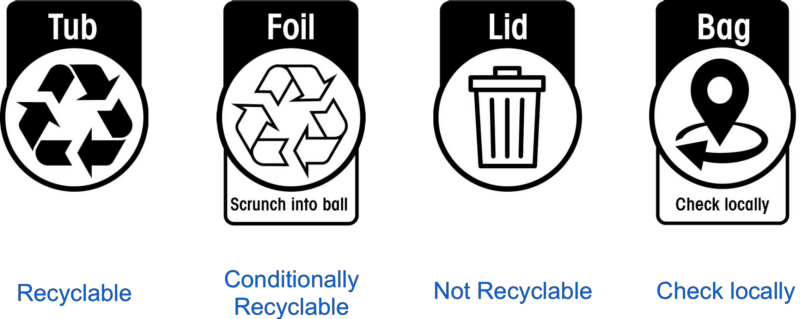
Your ARL Artwork File: If your packaging is deemed recyclable, you will receive the official, high-resolution ARL logo files specific to your packaging. For example, if the bottle is recyclable but the cap is not, the artwork will reflect this with a "Recyclable" bottle icon and a "Not Recyclable" cap icon.
An example of how the ARL artwork should be on a product in Australia and New Zealand.
Step 5: Apply the Artwork Correctly to Your Packaging
You can now provide the official artwork to your graphic designer. It is vital to follow the strict brand guidelines for the ARL which dictate minimum size, clear space and correct placement to ensure readability for the consumer.
Summary of how to correctly incorporate ARL

From Compliance to Competitive Advantage
Following this process does more than just keep you compliant. It transforms your packaging from a potential liability into a statement of transparency and trust.
Using the ARL correctly shows your customers that you respect them enough to give them accurate information. It proves that your sustainability claims are backed by evidence. Most importantly, it gives you a clear roadmap to design packaging that is not just compliant but genuinely ready for a circular economy.
The PREP assessment process is technical and time-consuming. Circular Blueprint can manage the entire ARL process for you -from liaising with suppliers for data to conducting the PREP assessment and providing the final artwork- guaranteeing accuracy and saving you valuable time. Contact us today for a confidential consultation.
Resources of this topic:
Is Your Strategy Ready for 2026?
Navigating the shifting regulatory landscape in Australia and New Zealand requires a plan, not guesswork. Download the free executive guide to:
- Master the new APCO targets.
- Optimise costs without sacrificing quality.
- Select the winning materials for the future.
Subscribe to our Email List
Get curated content delivered to your inbox.
No spams. Unsubscribe any time.


Expert packaging consultation focused on sustainability, compliance, and cost reduction for Australian and New Zealand businesses. Navigate complexity, achieve your goals.
Our Commitment
Helping Australian & NZ businesses achieve sustainable packaging goals, ensure regulatory compliance, and optimise costs for measurable results.
Circular Blueprint • NZBN 9429053436047
Privacy policy • Terms of service • All Rights Reserved